the rose period of picasso paintings
Pablo Picasso was born October 25, 1881, Malaga, Spain, and died on 8 April 1973 (aged 91) Mougins, France. He was trained by his father José Ruiz y Blasco (1838–1913) was a Spanish painter and art teacher of drawing at the Escuela Provincial de Bellas Artes in Málaga and a painter specialising in images of doves and pigeons, and gave his son his first art lessons in 1888. In 1891 the father moved to La Coruna and taught at the Escuela de Bellas Artes, where his son attended his ornamental drawing classes. In 1895 he moved to Barcelona and taught at the Escuela de Bellas Artes.
From that point his ability to experiment with what he learned and to develop new expressive means quickly allowed him to surpass his father's abilities. In La Corua his father shifted his own ambitions to those of his son, providing him with models and support for his first exhibition there at the age of 13.
The family moved to Barcelona in the autumn of 1895, and Pablo entered the local art academy (La Llotja), where his father had assumed his last post as professor of drawing. In 1897 his eventual fame in Spain seemed assured; in that year his painting Science and Charity, for which his father modeled for the doctor, was awarded an honorable mention in Madrid at the Fine Arts Exhibition.
Since Pablo Picasso was trained to paint by his father from a very young age, he absorbed his influence as well as that of the traditions of Spanish art. By his early 20s, he had moved to Paris, and quickly changed his earth-toned colors to a palette which was more emotionally expressive. His first truly original works were those of his Blue period. The young artist was facing some difficult times after the death of his closest friend, and was also experiencing financial troubles during his first years in Paris. His paintings of this time were created in predominantly blue tones, and the images were of immaciated people who look like they are down on their luck. Despite this, the paintings achieve a sense of mystery, and these are some of his most poetic images.
In the autumn of 1897 he entered the Royal Academy of San Fernando. But finding the teaching there stupid, he increasingly spent his time recording life around him, in the cafés, on the streets, in the brothels, and in the Prado, where he discovered Spanish painting.
Picasso made his first trip to Paris in 1900. Paris was then the art capital of Europe. There, he met his first Parisian friend, the journalist and poet Max Jacob, who helped Picasso learn the language and its literature. These were times of severe poverty, cold, and desperation.
In Picasso’s “Blue Period” (1901-1904), his blue paintings portray destitute human beings. Blue was chosen deliberately — deep and cold, signifying misery and despair — to intensify the hopelessness of the figures depicted, such as beggars, prostitutes, the blind, out-of-work actors and circus folk, as well as Picasso himself and his penniless friends. At the time, Picasso even wore blue clothes.
In 1905-6, Picasso's palette began to lighten considerably, bringing in a distinctive beige or "rose" tone. The subject matter also is less depressing. Here are the first appearances by the circus performers and clowns that will populate Picasso's paintings at various stages through the rest of his long career.
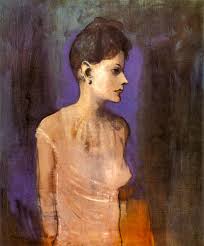
When Picasso’s colors brightened, in what has somewhat misleadingly been termed the “Rose Period” (1904-1906), because not only soft pinks, but blues, reds and greens complement these images. The emaciated figures became fuller. The new color expresses warmth and life. Picasso’s paintings are beginning to sell, and he now has a studio, a lover and a life. The two periods — the “Blue” and the “Rose” — form a transition between the conventional art of his youth and the iconoclastic art of his maturity. In 1907, Picasso and Georges Braque introduce Cubism, where form no longer appears to follow the traditional rules of three-dimensional representation. The “Blue” and “Rose” periods remain popular because the human figure is less undistorted and more recognizable than in Picasso’s Cubist works.

Sources:
en.wikipedia
Life123
webexhibits
NYTimes
mesosyn
all-art
artchive
robinurton
ajmiles
Pablo Picasso was born October 25, 1881, Malaga, Spain, and died on 8 April 1973 (aged 91) Mougins, France. He was trained by his father José Ruiz y Blasco (1838–1913) was a Spanish painter and art teacher of drawing at the Escuela Provincial de Bellas Artes in Málaga and a painter specialising in images of doves and pigeons, and gave his son his first art lessons in 1888. In 1891 the father moved to La Coruna and taught at the Escuela de Bellas Artes, where his son attended his ornamental drawing classes. In 1895 he moved to Barcelona and taught at the Escuela de Bellas Artes.
From that point his ability to experiment with what he learned and to develop new expressive means quickly allowed him to surpass his father's abilities. In La Corua his father shifted his own ambitions to those of his son, providing him with models and support for his first exhibition there at the age of 13.
The family moved to Barcelona in the autumn of 1895, and Pablo entered the local art academy (La Llotja), where his father had assumed his last post as professor of drawing. In 1897 his eventual fame in Spain seemed assured; in that year his painting Science and Charity, for which his father modeled for the doctor, was awarded an honorable mention in Madrid at the Fine Arts Exhibition.
Since Pablo Picasso was trained to paint by his father from a very young age, he absorbed his influence as well as that of the traditions of Spanish art. By his early 20s, he had moved to Paris, and quickly changed his earth-toned colors to a palette which was more emotionally expressive. His first truly original works were those of his Blue period. The young artist was facing some difficult times after the death of his closest friend, and was also experiencing financial troubles during his first years in Paris. His paintings of this time were created in predominantly blue tones, and the images were of immaciated people who look like they are down on their luck. Despite this, the paintings achieve a sense of mystery, and these are some of his most poetic images.
In the autumn of 1897 he entered the Royal Academy of San Fernando. But finding the teaching there stupid, he increasingly spent his time recording life around him, in the cafés, on the streets, in the brothels, and in the Prado, where he discovered Spanish painting.
Picasso made his first trip to Paris in 1900. Paris was then the art capital of Europe. There, he met his first Parisian friend, the journalist and poet Max Jacob, who helped Picasso learn the language and its literature. These were times of severe poverty, cold, and desperation.
In Picasso’s “Blue Period” (1901-1904), his blue paintings portray destitute human beings. Blue was chosen deliberately — deep and cold, signifying misery and despair — to intensify the hopelessness of the figures depicted, such as beggars, prostitutes, the blind, out-of-work actors and circus folk, as well as Picasso himself and his penniless friends. At the time, Picasso even wore blue clothes.
In 1905-6, Picasso's palette began to lighten considerably, bringing in a distinctive beige or "rose" tone. The subject matter also is less depressing. Here are the first appearances by the circus performers and clowns that will populate Picasso's paintings at various stages through the rest of his long career.
When Picasso’s colors brightened, in what has somewhat misleadingly been termed the “Rose Period” (1904-1906), because not only soft pinks, but blues, reds and greens complement these images. The emaciated figures became fuller. The new color expresses warmth and life. Picasso’s paintings are beginning to sell, and he now has a studio, a lover and a life. The two periods — the “Blue” and the “Rose” — form a transition between the conventional art of his youth and the iconoclastic art of his maturity. In 1907, Picasso and Georges Braque introduce Cubism, where form no longer appears to follow the traditional rules of three-dimensional representation. The “Blue” and “Rose” periods remain popular because the human figure is less undistorted and more recognizable than in Picasso’s Cubist works.
Sources:
en.wikipedia
Life123
webexhibits
NYTimes
mesosyn
all-art
artchive
robinurton
ajmiles

No comments:
Post a Comment